
Today, we announce successful awardees of the Dream Fund, made possible through our eight-year partnership with NatWest and the support of not-for-profit Girl Dreamer.
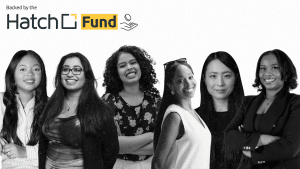
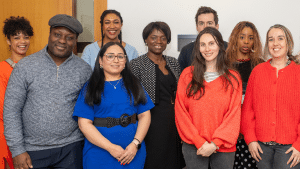
Ten young women of colour aged between 18-35 have received a £2,500 grant through the fund. Each leading bold, impact-driven ventures outside of London. The £25,000 total investment will support the development of businesses tackling social inequality across Manchester, Birmingham, Nottingham and Bristol.
Traditional grant models often exclude young women of colour due to overstretched requirements and a lack of commitment to funding ventures led by lived experience. They typically require navigating a significant amount of red tape, with founders expected to dedicate a significant amount of time and resources to each application.
But the Dream Fund, much like the grant model used by us at Hatch, flips that script. Designed by not-for-profit Girl Dreamer, the fund focuses on trust and seeing the potential in young women of colour without the need to jump through hoops to access capital.
Geographical Equity
In The Entrepreneurs Club report published last year, we identified that people in London were twice as likely to say that an entrepreneur resembled them. The Dream Fund was strategically chosen to improve access to capital for those with intersecting barriers to entrepreneurship and capital outside of London, so that innovation by young women of colour across the country can expand. We want to see greater representation of women of colour in leadership positions, so others across the UK can see role models like themselves.

Meet The Grantees
Asmaa Ali, melaSKN
Bianca Danielle Williams, Melanin Markets
Jamila Dankaro, Abinchi Club
Deshaun Hancock, Bloom & Flow
Maudlyn Akosua Awuku, GEWE NETWORK
Adeola Adelakun and Ronke Jane, Black Creative Trailblazers
Dinah Noel, The Wholeness Pod
Saffron Houston, Advidity
Efia Mainoo, BlackOwned Studios + Marketplace
Alaya Holloway, FirstGens C.I.C
The £25,000 fund will be split between ventures tackling vital challenges addressing social inequality for a wide range of different communities
Economic empowerment, social mobility, and equal access to health and wellbeing services play a key role in the collective mission of businesses successfully awarded funding. Under these umbrellas, a wide range of key target audiences will be reached, tackling these challenges head-on. They include Black and ethnic minority communities, women, socioeconomically disadvantaged professionals, young people (under 26), socially isolated adults, those from low-income backgrounds and those living with chronic illness.
The process of supporting individuals, especially those from typically marginalised groups, with the capacity and resources to control their own financial lives.
Economically empowered people are able to fully participate in economic systems like credit and savings.
Businesses working to increase economic empowerment might be providing resources that support employment, self-employment, education, or income-generating activities.
Social mobility is a key component of ensuring equal access to a fair chance in life, regardless of background or lived experience. It is commonly understood as the difference between a person’s and their parents’ social status (like income or occupation).
Businesses addressing social mobility might be working to increase the quality of education, social capital, or work opportunities for those experiencing low social mobility (a strong link between a person’s circumstances and their parents’).
Health and wellbeing can play a significant role in quality of life.
Access to health and wellbeing services can directly contribute to longevity, mental wellbeing, social inclusion, recovery from illness or pain management as examples.
Businesses addressing disparities in health and wellbeing might be offering accessible healthcare, therapy or wellbeing interventions for those typically unable to access them.
Where Will The Money Be Going?
Across the ten founders awarded funding, the most popular use of grant spend was on product and service development. This was followed by marketing and brand visibility spend and operational and infrastructure costs.
Product and service development accounted for over 30% of the total £25,000 fund, encompassing critical development areas such as product development, sampling, laboratory analysis, product safety screenings, and digital infrastructure development costs.

Social impact created by lived experience matters. Just like all ten Dream Fund grantees, social enterprise leaders are often building solutions shaped by real challenges, real insights, and real experiences.
When founders bring that real-world understanding to the heart of their work, the impact of tackling issues of social inequality holds a unique relevance, more sustainable in the long term. Understanding lived experience as a vital strength in entrepreneurship means we can tackle key challenges like isolation, industry exclusion, or disparities in education systems, from the inside out, not from the outside in.
Hatch Enterprise exists to place trust, confidence and capital in those who have long been overlooked by traditional funding systems. Over the past decade, we’ve provided resources to over 10,000 entrepreneurs and aspiring entrepreneurs from underrepresented backgrounds, and our mission to build a better world through entrepreneurship continues to feel more relevant than ever.
6
new sign-ups per day
180
new sign-ups per week
2190
new sign-ups in the last 12 months
We’ve changed a lot since 2014 when Hatch Enterprise opened its doors to our first cohort in Walworth, South London. Yet the urgency remains.
Somebody submits an inquiry for our support every three hours.
Over the last 12 months alone, inquiries for our services have exponentially increased, with an astonishing 2000+ submissions since September 2024.

When there is a critical push by the UK government to stimulate economic growth, we know that breaking down barriers to entrepreneurship is a part of the solution.
People want to play their role in the UK economy, and a key focus for both us at Hatch and the NatWest team over the last eight years has been to provide the right support to advance social mobility across the UK through entrepreneurship. Whether that’s for people already running a business, or whether somebody is looking to set up their own business. We want to provide the right support that makes sure people, their communities, and wider society can benefit from the talent and innovative potential of those overlooked for too long.
Rebekah Sun, CEO at Hatch Enterprise

Our partnership with Hatch Enterprise and NatWest has truly enabled us to elevate and support women who are statistically at a disadvantage when it comes to accessing funding. With GirlDreamer's roots in the Midlands, we were especially excited to connect with a fund that focuses on women of colour outside of London and the Southeast—regions that typically receive more financial support. Thanks to this fund, ten incredible women of colour are able to grow and flourish in building their organisations. Access to a funder of this scale is invaluable and plays a vital role in strengthening our ecosystem.
Kayalveli Sivakanthan, Head of Programmes & Community at GirlDreamer

As one of the biggest banks for business in the UK, we aim to support businesses from all communities and across all regions of the country. We see the creation of thriving entrepreneurial communities across the UK as central to the sense of belonging that businesses need to succeed. Due to the intensity of that support and the community we create through brilliant partnerships with the team at Hatch, or via our own Accelerator community, there are very often lasting bonds made between the businesses, the teams and the wider support network – that’s what sets us apart and makes this partnership, as a shining example, so special.
Nick Howe, Enterprise Manager at NatWest

Since 2017, our partnership with NatWest has supported hundreds of entrepreneurs across the UK through cohort programmes, networking, mentoring, online workshops and strategic grant initiatives like the Dream Fund. This year alone, we’ve supported 258 businesses led by a purpose to create positive social change.
We’re on the lookout for new strategic partners like NatWest, who are ready to work with us, providing the financial backing to continue working towards our vision of an inclusive entrepreneurial ecosystem that offers everybody, no matter their background, the opportunities, resources, and funding to build a better world through entrepreneurship.